 U.S.A. 1-800 438-9095


Breguet
-
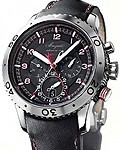 Type XXII
-
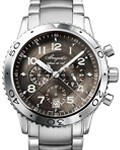 Type XXI
-
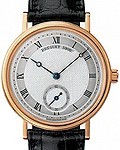 Classique
-
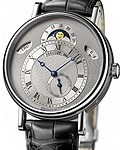 Classique Moonphase
-
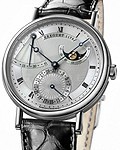 Classique Power Reserve
-
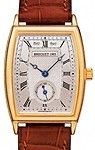 Breguet Heritage
-
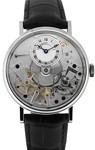 La Tradition
-
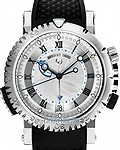 Marine
-
 Type XX
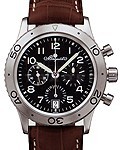
Breguet is a manufacturer of luxury watches, founded by Abraham-Louis Breguet in Paris in 1775. Breguet is one of the oldest surviving watch-making establishments and is the pioneer of numerous watch-making technologies. Breguet watches are often easily recognized for their coin-edge cases, guilloch dials and blue pomme hands (often now referred to as ‘Breguet hands’).
Breguet is known for perfecting and inventing the tourbillon. Even with today’s advanced technology, the tourbillon can only be built by the most skilled watchmakers. Breguet began with the theory that the gravity of a pocket watch (that was almost always carried vertically) led to deviations in timekeeping. He wanted to rule out all differences of position with the tourbillon. Tourbillons counters the effects of gravity by mounting the escapement and balance wheel in a rotating cage, ostensibly in order to negate the effect of gravity when the timepiece (and thus the escapement) is rotated.
Timepiece Trader, LLC sells authentic Breguet watches, every pre-owned watch purchased from Timepiece Trader, LLC comes standard with a one year, in-house warranty from the date of purchase.
Search
Brands
- A. Lange & Sohne (120)
- 1815 Annual Calendar (2)
- 1815 Rattrapante Perpetual Calendar (1)
- 1815 Up/Down (15)
- Datograph (5)
- Datograph Perpetual (1)
- Daymatic (3)
- Double Split (2)
- Grand Lange 1 (16)
- Lange 1 (10)
- Lange 1 Moonphase (5)
- Lange 1 Time Zone (4)
- Lange 31 (2)
- Langematik (1)
- Langematik Perpetual (7)
- Little Lange 1 (2)
- Richard Lange (8)
- Saxonia (29)
- Saxonia Moon Phase (2)
- Tourbograph "Pour Le Merite" (1)
- Zeitwerk (4)
- Artisans de Geneve (2)
- Rough Matte Diver (1)
- Tribute to the 5513 (1)
- Audemars Piguet (257)
- Code 11.59 (8)
- Jules Audemars (12)
- Jules Audemars (Ladies) (13)
- Millenary (12)
- Millenary (Ladies) (15)
- Royal Oak (56)
- Royal Oak Chronograph (23)
- Royal Oak Concept (1)
- Royal Oak Ladies (16)
- Royal Oak Offshore (54)
- Royal Oak Offshore Chronograph Lady (9)
- Royal Oak Offshore SE (26)
- Royal Oak Perpetual Calendar (5)
- Royal Oak Quartz (11)
- Royal Oak Tourbillon (2)
- Baume & Mercier (2)
- Bell & Ross (105)
- BR 123 Vintage (6)
- BR-S Ceramic Quartz 39mm (18)
- BR-S Mechanical Gold 39mm (2)
- BR01-92 (16)
- BR01-93 (1)
- BR01-94 (17)
- BR01-96 Big Date (1)
- BR01-97 Power Reserve (3)
- BR02-92 Automatic 44mm (9)
- BR02-94 Chronograph 44mm (1)
- BR03-51 GMT (1)
- BR03-90 Big Date Power Reserve (1)
- BR03-92 (13)
- BR03-94 Chronograph (6)
- Vintage Heritage (1)
- Vintage WW1 (9)
- Blancpain (87)
- 500 Fathoms (2)
- Fifty Fathoms (14)
- Ladies (11)
- Le Brassus GMT (1)
- Leman Aqua Lung (3)
- Leman Big Date (5)
- Leman Chronograph (1)
- Leman Complete Calendar (2)
- Leman Flyback Chronograph (5)
- Leman Moonphase (5)
- Leman Reveil (1)
- Leman Reveil Alarm (1)
- Leman Reveil GMT (2)
- Leman Tourbullon (1)
- Super Trofeo (1)
- Villeret 8 Days Manual Wind (4)
- Villeret Annual Calendar (2)
- Villeret Chronograph (1)
- Villeret Complete Calendar (10)
- Villeret Half Timezone (3)
- Villeret Moonphase (8)
- Villeret Single Pusher Chronograph (2)
- Villeret Small Seconds Date (1)
- Villeret Tourbillon (2)
- Villeret Ultra Slim Power Reserve (12)
- Villeret Ultraplate (2)
- Breguet (39)
- Breguet Heritage (9)
- Classique (13)
- Classique Moonphase (1)
- Classique Power Reserve (1)
- La Tradition (3)
- Marine (5)
- Type XX (3)
- Type XXI (3)
- Type XXII (1)
- Breitling (177)
- Aerospace (1)
- Avenger (45)
- Avenger Chronograph (1)
- Avenger Seawolf (1)
- Bentley (6)
- Bentley Flying B (4)
- Chrono-Matic (3)
- Chronomat (5)
- Chronomat Evolution (2)
- Chronospace (1)
- Colt (3)
- Emergency (1)
- Hercules (1)
- Montbrillant (45)
- Navitimer (43)
- Super Avenger (5)
- Transocean (12)
- Bremont (1)
- BRM (2)
- V-16 (2)
- Bvlgari (88)
- Cartier (333)
- Baignoire (21)
- Ballon Blanc (6)
- Ballon Bleu (114)
- Calibre de Cartier (22)
- Cle De Cartier (12)
- Drive de Cartier (9)
- Dumont (1)
- Panthere de Cartier (18)
- Pasha de Cartier (20)
- Roadster (4)
- Ronde Louis (8)
- Ronde Solo (16)
- Rotonde (5)
- Santos (1)
- Santos 100 (7)
- Santos De Cartier (12)
- Santos Dumont (8)
- Tank Americaine (12)
- Tank Chinoise (1)
- Tank Cintree (2)
- Tank Francaise (8)
- Tank Louis Cartier (9)
- Tank MC (4)
- Tank Solo (11)
- Tortue (6)
- Chanel (16)
- J12 (16)
- Chopard (22)
- Chopard Ladies (2)
- Grand Prix de Monaco Historique (5)
- Mille Miglia (13)
- Rattrapante Stopwatch (1)
- Chronoswiss (5)
- Chronoswiss Opus (1)
- Chronoswiss Perpetual Calendar (1)
- Grand Regulateur (1)
- Imperia (2)
- Concord (6)
- C1 (6)
- Corum (33)
- Admirals Cup (25)
- Bubble (2)
- Golden Bridge (4)
- Romulus (2)
- Cvstos (7)
- Challenge (6)
- Challenge R (1)
- Daniel Roth (1)
- DB MILAU (9)
- de Grisogono (4)
- Novantatre (1)
- Power Breaker (1)
- Uno (2)
- DeBethune (2)
- Dreadnought (1)
- Dubey & Schaldenbrand (1)
- GMT Alarm (1)
- F.P. Journe (4)
- Centigraphe (1)
- Chronometre Souverain (1)
- Elegante (1)
- Octa (1)
- Franc Vila (6)
- Franck Muller (10)
- 9900 (1)
- Casablanca (2)
- Cintree Curvex (3)
- Conquistador (4)
- Endurance 24 (1)
- Gerald Genta (5)
- Girard Perregaux (22)
- 1966 (2)
- BMW Oracle Racing (2)
- Classique Elegance (3)
- Ferrari (2)
- Girard Perregaux Perpetual Calendar (1)
- Laureato (2)
- RD 01 (1)
- Sea Hawk (2)
- Vintage 1945 (3)
- World Timer (5)
- Glashutte Original (18)
- Pano Tourbillon (1)
- PanoDate PanoMatic (3)
- PanoInverse XL (2)
- PanoMaticReserve XL (1)
- Senator (1)
- Senator Chronograph (1)
- Senator Navigator (2)
- Senator Panorama Date (1)
- Senator Panorama Date Moonphase (1)
- Senator Perpetual Calendar (1)
- Sport Evolution (2)
- Sport Evolution Chronograph (1)
- Sport Evolution Perpetual Calendar (1)
- Graham (6)
- Brawn GP (2)
- Chronofighter (1)
- Grand Silverstone (1)
- Silverstone (1)
- Swordfish (1)
- Grand Seiko / Seiko (8)
- Marine Master 600m (4)
- Sport Collection (6)
- Guy Ellia (1)
- Time Space (1)
- H. Moser & Cie. (1)
- Harry Winston (9)
- Avenue Squared (1)
- Harry Winston Opus (1)
- Midnight (1)
- Ocean Diver (3)
- Tourbillon World Time (3)
- Hautlence (4)
- Heritage (1)
- Hublot (755)
- Big Bang (72)
- Big Bang 41mm (43)
- Big Bang 44mm (25)
- Big Bang Aero Bang (3)
- Big Bang King (1)
- Big Bang King 48mm (15)
- Big Bang King Power 48mm (34)
- Big Bang Ladies (3)
- Big Bang Quartz (9)
- Big Bang UNICO (59)
- Classic (2)
- Classic Fusion (422)
- Masterpiece MP (2)
- Spirit Of Big Bang (66)
- IWC (329)
- Aquatimer (33)
- Big Pilot (31)
- Chronograph (1)
- Classic Mark XVI (1)
- Da Vinci (34)
- Ingenieur (37)
- Pilots Editions (61)
- Portofino (62)
- Portugieser (10)
- Portuguese (60)
- Spitfire (5)
- Jaeger LeCoultre (389)
- AMVOX (8)
- Atmos (3)
- Duometre (7)
- Grand Complication (2)
- Grande Reverso Email (1)
- Master Calendar (8)
- Master Chronograph (7)
- Master Compressor (21)
- Master Compressor (ladies) (1)
- Master Compressor Divers (14)
- Master Control (20)
- Master DualTime (4)
- Master Eight Days Perpetual (6)
- Master Geographic (6)
- Master Grand Ultra Thin (17)
- Master Grande Reveil (1)
- Master Memovox (8)
- Master Tourbillon (3)
- Master Ultra Thin (34)
- Polaris (18)
- Rendez-Vous (31)
- Reverso (57)
- Reverso Art Deco (2)
- Reverso Classique (14)
- Reverso Duetto (1)
- Reverso Duetto Duo (3)
- Reverso Grande Date (2)
- Reverso Grande Duo (3)
- Reverso Grande Size (5)
- Reverso Grande Taille (4)
- Reverso Grande Ultra Thin (16)
- Reverso Lady (13)
- Reverso Lady Jewellery (2)
- Reverso Reserve de Marche (5)
- Reverso Squadra (27)
- Reverso Squadra (Ladies) (11)
- The Collectibles (12)
- Tribute to Deep Sea (6)
- Kobold (2)
- Leroy (1)
- Linde Werdelin (1)
- 3 Timer Nord (1)
- Louis Vuitton (1)
- MB&F (5)
- Machine No 2 (3)
- Machine No 3 (1)
- MB&F Max Busser RED Edition (1)
- Omega (20)
- Constellation (1)
- De Ville (1)
- Flightmaster (1)
- Planet Ocean (3)
- Seamaster (8)
- Speedmaster (8)
- Panerai (368)
- Barometer (1)
- Contemporary Luminor 1950 10 Days (2)
- Depth Gauge (2)
- Hygrometer (1)
- Luminor (41)
- Luminor 1950 10 Days GMT (2)
- Luminor 1950 3 Days (2)
- Luminor 1950 3 Days Chrono Flyback (5)
- Luminor 1950 3 Days GMT Automatic (15)
- Luminor 1950 8 Days GMT Historic (6)
- Luminor 1950 Chrono Monopulsante 8 Days GMT (2)
- Luminor 1950 Left-Handed (1)
- Luminor 1950 Pangaea Submersible Depth Gauge (1)
- Luminor 1950 Rattrapante 8 Days (1)
- Luminor 1950 Regatta 3 Days Chrono Flyback (3)
- Luminor 1950 Tourbillon GMT 47mm (3)
- Luminor 8 Days (2)
- Luminor 8 Days Set (1)
- Luminor Base Historic (11)
- Luminor Base Logo (6)
- Luminor California (1)
- Luminor Chronograph Contemporary (10)
- Luminor Composite 1950 3 Days (1)
- Luminor Due (38)
- Luminor GMT (Contemporary) (8)
- Luminor Left Handed (1)
- Luminor Marina 1950 3 Days Automatic (18)
- Luminor Marina Acciaio (7)
- Luminor Marina Automatic Contemporary (9)
- Luminor Marina Historic (13)
- Luminor Marina Logo (4)
- Luminor Power Reserve Contemporary (8)
- Luminor Submersible (4)
- Luminor Submersible 1950 3 Days (10)
- Luminor Submersible Contemporary (17)
- Manifattura (1)
- Mare Nostrum (2)
- Panerai Luminor 1950 (9)
- Pocket Watch (3)
- Radiomir (17)
- Radiomir 1940 (1)
- Radiomir 1940 10 Days (2)
- Radiomir 1940 3 Days (17)
- Radiomir 1940 Chrono Monopulsante (2)
- Radiomir Black Seal (6)
- Radiomir Chrono Contemporary (2)
- Radiomir GMT Contemporary (2)
- Radiomir Historic (13)
- Radiomir Logo (1)
- Radiomir S.L.C. (1)
- Special Editions 2000 (1)
- Special Editions 2001 (1)
- Special Editions 2002 (1)
- Special Editions 2003 (1)
- Special Editions 2004 (2)
- Special Editions 2005 (3)
- Special Editions 2006 (3)
- Special Editions 2007 (1)
- Special Editions 2008 (1)
- Special Editions 2009 (2)
- Special Editions 2010 (1)
- Special Editions 2011 (2)
- Special Editions 2012 (2)
- Submersible (23)
- Table Clock (3)
- Thermometer (1)
- Wall Clock (2)
- Parmigiani Fleurier (10)
- Kalpa Grande (1)
- Kalpa Tonda 42 (1)
- Kalpa XL Hebdomadaire Steel (1)
- Parmigiani Fleurier Kalpa XL (2)
- Pershing 45 (1)
- Tonda (4)
- Patek Philippe (16)
- 5056P (1)
- 5960 (1)
- Aquanaut (2)
- Calatrava Collection (1)
- Complicated Collection (2)
- Gondolo (1)
- Grand Complication (1)
- Nautilus (7)
- Piaget (7)
- Pierre Kunz (1)
- Insanity (1)
- Porsche Design (2)
- GT3 RS (1)
- P6520 Compass (1)
- Raymond Weil (1)
- Richard Mille (9)
- RM Collection (9)
- Roger Dubuis (14)
- Easy Diver (3)
- Excalibur (3)
- Golden Square (3)
- Hommage (1)
- La Monegasque (1)
- Much More (1)
- Sympathie (2)
- Rolex (44)
- Date (2)
- Datejust (5)
- Day-Date (2)
- Day-Date President (2)
- Daytona (5)
- Explorer I (1)
- Explorer II (4)
- GMT-Master II (6)
- Milgauss (1)
- Sea-Dweller (2)
- Submariner (10)
- Yacht-Master (4)
- Romain Jerome (4)
- Sinn (1)
- U1 SDR (1)
- Special Offers (18)
- Tag Heuer (1)
- Monaco Automatic (1)
- Tudor (2)
- Aeronaut GMT (1)
- Heritage (1)
- Ulysse Nardin (512)
- Caprice (66)
- Circus (1)
- Classico (8)
- Diver (42)
- El Toro (4)
- Executive Dual Time (53)
- Freak (5)
- GMT Big Date (63)
- GMT Perpetual Calendar (24)
- Hourstriker (12)
- Kremlin (1)
- Lady Marine Diver (35)
- Macho Palladium (4)
- Marine Chronometer (33)
- Marine Chronometer Manufacture 43mm (23)
- Marine Chronometer Manufacture 45mm (12)
- Marine Limited Edition (2)
- Maxi Marine Diver (35)
- Quadrato (72)
- Royal Blue Mystery Tourbillon (1)
- San Marco (2)
- Sonata (15)
- Urwerk (2)
- 103T Collection (1)
- 200 Collection (1)
- Vacheron Constantin (172)
- 1972 (6)
- Harmony (6)
- Historiques (7)
- Malte Lady (10)
- Malte Tourbillon (7)
- Metiers D'Art (16)
- Overseas Automatic (6)
- Overseas Chronograph (14)
- Overseas Dual Time (4)
- Patrimony (81)
- Quai de l'Ile Date (8)
- Royal Eagle (2)
- Traditionnelle (5)
- Zenith (145)
- Academy (1)
- Baby Star Glam Rock (1)
- Captain (9)
- Chronomaster (33)
- Chronomaster Grande Date (3)
- Chronomaster Moonphase Lady (1)
- Chronomaster Tourbillon (1)
- Class (3)
- Class Elite (4)
- Class Open (2)
- Defy (31)
- Defy Classic (8)
- Defy Xtreme (1)
- El Primero (11)
- Elite (11)
- Pilot (14)
- Pilot Montre d'Aeronef (1)
- Rainbow Flyback (1)
- Star Rock (Ladies) (2)
- Zenith Heritage (8)
























 timepiecetrader.com